Sunday, March 11, 2012

Initiating a Horror Novice


A Horror Novice must be introduced to the genre carefully to keep from scarring them for life! 


When one finds something that they enjoy, human nature leads them to want to share that something with others. Like when you find a great restaurant or hear a new band that you love and can’t wait to bring your friends or family to dinner or a concert. We as “horror freaks” feel the same way about horror movies. The problem that we face is that we can’t just show any horror movie to a horror novice.


This is not a definitive list, but these are the films that I have found to produce the intended outcome – enabling a new “ horror freak”.


So let’s begin, shall we?


Slasher – April Fool’s Day


April Fool’s Day is a great introduction to the “slasher” film. It starts lighthearted enough to be fun, the tension builds slowly but steadily, there are well place “jump” scenes, and the gore effect is low-keyed. With a well done surprise ending, it should have a horror novice prepared for the next logical step. The “slasher ” sub-genre is well defined enough where you should be able to move directly into Halloween, Nightmare on Elm Street, or Friday the 13th with little to no problems.


Ghost – The Amityville Horror


All ghost stories have one thing in common: They are all supposed to leave an impression on your mind that has you wondering what that shadow in the corner is. The difference for a horror novice would be the effects and gore. The Amityville Horror is a great starter for this reason. The gore is low key if not even non existent and the effects are typical for the late seventies. I would then follow up with Poltergeist or The Changeling. If you are in a real jaunty mood you could try A Chinese Ghost Story but you better be prepared for the reaction if your prospect has not been properly introduced.


Monster – Jeepers Creepers


Jeepers Creepers is the perfect modern day monster movie for newbies. Though theoretically every horror movie is a monster movie, the ones that get classified in this sub-genre have a creature that is not normally found in nature in its current form. Jeepers Creepers happens to have a demon looking thing to fill this requirement. It has suspense, gore, supernatural happenings, and dopey teenagers but nothing that could be labeled as over the top. You could possibly follow this with the monster flick of your choice, but for a severe horror novice I would go with something along the caliber of Pumpkinhead.


Psychotic – Psycho


This is probably the most disturbing of the sub-genres of horror. It takes an otherwise normal average person next door and makes him/her the villain in a “psychotic” way. Psycho is the perfect example of the psychotic sub-genre. Alfred Hitchcock takes plain, feeble, and shy Norman Bates and uses an overbearing and controlling mother to create a monster in every sense of the word except his appearance. Though released in 1960, Psycho stands the test of time and is a perfect starter film in this sub-genre for the horror novice. Great follow ups would include Misery, Seven, and May.


Zombie – Shaun of the Dead


There was never really a great beginner’s zombie film until Shaun of the Dead came on the scene. It is virtually impossible to separate the zombie from the gore and it is the gore that usually turns the hopeful horror novice away from the sub-genre. What makes Shaun of the Dead such a good choice is that it is a classic zombie film on all accounts without detracting from anything that zombie lovers look for and still it is funny enough for a newbie to watch and accept the gore. I have found that the easiest way to move on from here is to start telling the prospect about the many references in SOTD to other zombie films and then show them. The typical horror novice might require multiple viewings of SOTD before being ready to more on, but I see absolutely nothing wrong with that.


This list should be enough to start the meek down the path to Horror Freak. 

Monday, November 28, 2011

Charulata - Satyajit Ray's Best


Charu lives a lonely and idle life in 1870s India. Although her husband devotes more time to his newspaper than to their marriage, he sees her loneliness and asks his brother-in-law, Amal, a would-be writer to keep her company. However, after several months, Charu and Amal's feelings for each other move beyond literary friendship.


Set in British India in the 19th century, the film revolves around Charulata, the beautiful wife of a learned Calcutta intellectual. She sits at home alone while her wealthy husband Bhupati runs his English language newspaper. Upon recognizing her profound loneliness, Bhupati invites his brother-in-law Umapada and wife Mandakini as house guests. Amal, his handsome younger cousin also comes for a visit following his graduation from college. Charu and Amal spend hours reminiscing over literature, poetry and the arts while Bhupati works on his paper. For a short time everyone is content. Then, a tragedy occurs. Umapada absconds with Bhupati's savings, leaving the entrepreneur in terrible debt. But the betrayed man soon realizes that something much more precious than his money is lost.

Suraj Ka Satvan Ghoda -- Peak of India's Art Genre


In this movie, the narrator, Manik Mulla (Rajit Kapur) tells three stories of the three women, (Neena Gupta (the poor), Pallavi Joshi (the intellectual) and Rajeshwari Sachdev (middle class)), he had met in his life at different times. These three stories are nothing but a single story seen from stands of different characters of the film.


The lowest, slowest or the weakest in a group or society determines the speed or progress of the whole. The title of the movie, a metaphor as the movie itself, draws this analogy with the seventh horse pulling the chariot of the sun. As a director of abstract meaningful cinema, Shyam Benegal pulls off another masterpiece that makes you think. Lightly laced with extremely subtle humor, this is a story of love that is markedly different from the many love stories on screen.
An interesting narrative approach adds to the abstractness - as the film is presented as a flashback of a contemporary artist (Raghuvir Yadav). He remembers the many stories of a born-raconteur (Rajit Kapur) during the gossip sessions of four young men with no better way to pass time. The neo-realism in the stories and the starkness of human character brings life to the narrative.
The film is narrated in a series of independent short stories. The brilliance of the director lies in tying these short stories with the same characters creating a complex matrix of humans and relations. The movie comes alive when the same events are depicted in the different stories. This is captured beautifully by showing the same scenes from different angles, emphasizing different personalities on screen, but the same dialogues.
All along the narrative, the movie amazes you with the realism of the stories - contrasted with the character of Rajit Kapur as a master storyteller. The audience to his stories add humor as well as an element of human nature to gossip about others.He plays an important role in each of the stories he tells yet he keeps himself aloof from the responsibilities and characters in his stories. At the same time, the personalities within the story portray a strong variety of human traits - positive and negative. Artistes like Amrish Puri, Samir Khakkar, K K Raina and others from the world of art cinema bring the stories alive. Rajeshwari Sachdev, Pallavi Joshi, and Neena Gupta play the love interests and vastly different characters. Any attempt to explain the narrative the movie or to divulge information about the characters would make the movie less interesting - as seeing the movie is an evolving discovery.
The music by Vanraj Bhatia plays a distinctive role. The direction is brilliant, and the performance of various lead actors is consistently superior. The script and dialogues are of the highest calibre.
However what strikes you at the end is the closeness between reality and the world of tell-tale; and the virtues and vices that exist in these worlds. How all this come together in the end is explained in a brief message in the end - but that still leaves a lot to thought. And indeed the movie is about thinking, and you leave the movie thinking about a host of issues raised throughout - from the virtues and demands of woman in love, the commitment of men in love - to more explicit and implicit elements of the human psyche.

Saturday, November 19, 2011

Ten Best Horror Movies you haven't seen


I presume many of you are searching for a good horror flick to curl up with this month, I thought I’d compile a new one made up of films that aren’t quite as widely known.


Yes, I love The Ring, The Orphanage and The Descent, but there are smaller, more niche movies that are deserving of your attention, and really, once you’ve been scared or grossed out once, it’s not quite the same if you watch the same film again.

Here are some new titles that some of you may have seen, but I predict most of you will have not. You may think a few of them suck, and I’ll admit they’re not without their flaws, but if you’re looking for a few decent horror films, you could do a lot worse than these. Feel free to chime in with your own suggestions in the comments. I’m always looking to expand my horizons.


10. All the Boys Love Mandy Lane


f you’re not in love with Amber Heard yet, watch Drive Angry, Zombieland or better yet, All the Boys Love Mandy Lane.


The film draws on the actresses insane sex appeal, and it’s sort of like if they made There’s Something About Mary a horror movie, as beauty can inspire boys to do crazy things.


It’s a fairly straightforward slasher film, but with a few clever twists thrown in, it stands out over similar films.


9. The Ruins


The Ruins is an interesting horror film that tries to be different than most other entries. It’s far from a perfect effort, but at least it’s trying, and it deserves a fair amount of points for that.


A group of hot young people (who else) go exploring to find some ancient Mayan ruins, but what they find is a curse that manifests itself in a way you probably wouldn’t expect.


It’s definitely one of the goofier entries on this list, but it’s worth it to at least figure out who the bad guy is. After that, judge whether or not you’d like to press on.


8. Wolf Creek


I always go back and forth over whether or not I truly like Wolf Creek, but in the end, I have seen it about three times so there must be something to it.


Wolf Creek benefits from having a long load up time that humanizes its future victims in a way that most horror films don’t bother to. I also like that it has a villain that’s literally the exact opposite of the mute masked killer archetype, as most of the time, he’s downright jovial. Still psychotic though.


The film falters when it gives in to a few horror cliches, most of which will have you screaming at the terrified twentysomethings onscreen “WHY WOULD YOU DO THAT?” but the film can shine despite this, and you won’t look at Australia as all kangaroos and Crocodile Dundee after this.


7. Splinter


Splinter is a weird little film that stuck itself in my brain and never really went away. Like many of my selections, it’s sci-fi meets horror, but this is probably the lowest budget entry of all of the ones I’m featuring.


Practically the entire film takes place in and around a gas station, where the patrons and a would be robber are terrorized by a force unknown.


Splinter is interesting because of its enemy, which isn’t a man with a weapon or a zombie-like plague. It’s the Splinter itself, but you’re going to have to watch the film to fully know what that means. That hand should be somewhat of a clue.


6. Suicide Club


Well I had to include at least one crazy ass Japanese movie on here didn’t I? I think that movies like Audition and Battle Royale are generally pretty well known, so I figured I’d try to drop one rung down with Suicide Club.


It’s a film that’s part horror, part social commentary on the astronomical suicide rate in Japan. The opening scene has a row of 40 singing school girls jump into the path of an oncoming train, and that’s only like, the third craziest thing in the movie. Can you say, rape/murder musical number? I kid you not.


Suicide Club may be a little too out there for some, but for those who can handle the madness that is Japanese horror, you might appreciate it.


5. The Crazies


This is probably the most recent movie I’m pulling for this list, so much so that I actually did a review of it while it was still in theaters, but I think enough people might have missed it where it’s worth revisiting and recommending.


The Crazies stars Timothy Olyphant as a small town sheriff whose world is turned upside down when the people in his town start going “crazy.” It sounds simple enough, but it’s truly terrifying to watch friends and neighbors and other seemingly normal people become slowly effected by the disease of madness, and there are some truly tense moments to be found here that will stay with you (the pitchfork scene, you’ll know what I mean).


The film escalates to a point FAR beyond where you thought a movie like this would EVER go, perhaps too far, but I vastly prefer it to other modern horror efforts a-la-The Strangers.


4. High Tension


Yeah, I know I put it on my last list, but I think it’s still relatively overlooked. I will be the first to admit that High Tension is not without its flaws, as it is in fact riddled with an insane amount of plotholes once a world flipping twist is revealed at the end, but that doesn’t mean it’s not a good film in a lot of other ways.


It’s the first of two French films on this list, and as it turns out, that country really knows its horror. High Tension is brutally violent, but features a protagonist that actually fights back against the horror that terrorizes her, which is a rarity in movies like this.


You may not appreciate the twist the way I did, but the journey to get there winds through one of the better made horror films out there, and is well worth the trip.


3. Midnight Meat Train


It’s the title that launched a thousand porn jokes, but if you can get past the initial snickering, Midnight Meat Train is an extremely unexpected quality horror flick that is very original in a genre that is usually a sea of copycats.


It even has people you recognize too! Bradley Cooper plays a photographer who gets wrapped up in the tale of the subway butcher, played by a yet again mute Vinnie Jones, who hacks people up on the last train out of town.


2. Triangle


There’s nothing too terribly innovative about a group of attractive people getting murdered on an abandoned spooky cruise ship, but once the time travel kicks in, things start to get interesting. Yes, you heard that correctly, time travel.


The film is perhaps more sci-fi than horror, but there’s plenty of blood and mayhem to be found nonetheless, and it’s an incredibly smart film that will have you trying to fully understand what you’ve just seen for hours afterwards, and hunting through internet forums to find the answer. After you’ve seen it for yourself, come back here and we can talk about it.


1. Martyrs


The French horror film Martyrs was originally recommended to me on the basis that it is one of the most “messed up” films in the genre, with a plot and specific scenes that can make even the most hardened horror veteran flinch.


It certainly lived up to that promise, as the film is absolutely stomach churning at times, but what I did NOT expect was the fact that Martyrs has some really profound themes running through it, and is one of the most intelligent horror movies out there despite all its gore.


If you can wade through the blood long enough for this message to become clear, I congratulate you. I’ve seen it with a few different groups of people, and many were split on what exactly the movie was trying to get across, and whatever you may believe in the end, it’s rare to see a movie in this genre inspire such a level of discourse.


Should you buy a DSLR or a Point and Shoot Camera ?


Are Megapixels Everything?


Before I get into the Pros and Cons of DSLRs vs Point and Shoot digital cameras I want to address a common misconception that I regularly hear among digital camera owners – that a cameras megapixel rating is the main thing to consider when determining a camera’s quality.


The fact is that megapixels are NOT everything. Despite point and shoot cameras now coming with up to 18 megapixels their quality level is not necessarily has good as a DSLR with only 1- or so.


The main reason for this (and there are many as we’ll see below) is that the image sensor used in point and shoot digital cameras is generally much smaller than the image sensor used in a DSLR (the difference is often as much as 25 times). This means that the pixels on a point and shoot camera have to be much smaller and (without getting too technical) collect fewer photons (ok I lied about the technicalities). The long and short of it is that because of this point and shoot cameras need to work at slower ISO levels which means that they produce ‘noisier’ (or more grainy) shots.


A lot more could be said on sensor size – but trust me, smaller sensors significantly reduce the quality of an image. I’d much rather have a camera with less megapixels and a larger image sensor than the other way around.


This is one factor that needs to be considered when choosing between a DSLR and point and shoot – but let me run through some more:


DSLRs


A quick definition - unfortunately some camera manufacturers in recent months have released cameras with the DSLR label that technically are not. For the purposes of this article I’ll define DSLR’s as cameras that have removable lenses, that have a reflex mirror which allows live optical viewing through the lens taking the image. ie DSLR’s use a mirror that allows you to see the image you’re about to shoot through the view finder – when you take the shot the mirror flips up allowing the image sensor to capture the image.


Some cameras these days are being touted as DSLRs because you have ‘through lens viewing’ but they are not true DSLR’s – (Digital, Single, Lens, Reflex). This does not necessarily make them a bad camera – but in my opinion it there is a distinction between them.


DSLR Strengths


  • Image Quality - I’ve already covered this above in my discussion on megapixels and image sensors – but due to the larger size of image sensors in DSLRs which allows for larger pixel sizes – DSLRs are generally able to be used at a faster ISO which will lead to faster shutter speeds and less grain.
  • Adaptability – DSLR’s ability to change lenses opens up a world of possibilities for photographers. While my point and shoot has a nice little 3x Optical Zoom (and many these days have longer ones) my DSLR can be fitted with many high quality lenses ranging from wide angle to super long focal lengths depending upon what I’m photographing (and of course my budget). Add to this a large range of other accessories (flashes, filters etc) and a DSLR can be adapted to many different situations. It should be noted that when it comes to lenses that the diversity in quality of lenses is great. Image quality is impacted greatly by the quality of the lens you use.
  • Speed – DSLR’s are generally pretty fast pieces of machinery when it comes to things like start up, focussing and shutter lag.
  • Optical Viewfinder – due to the reflex mirror DSLR’s are very much a what you see is what you get operation.
  • large ISO range - this varies between cameras but generally DSLRs offer a wide array of ISO settings which lends itself to their flexibility in shooting in different conditions.
  • Manual Controls – while many point and shoots come with the ability to shoot in manual mode, a DSLR is designed in such a way that it is assumed that the photographer using it will want to control their own settings. While they do come with good auto modes the manual controls are generally built in in such a way that they are at the photographers finger tips as they are shooting.
  • Hold it’s value – some argue that a DSLR will hold it’s value longer than a point and shoot. There is probably some truth in this. DSLR models do not get updated quite as often as point and shoot models (which can be updated twice a year at times). The other factor in favor of DSLRs is that the lenses you buy for them are compatible with other camera bodies if you do choose to upgrade later on (as long as you stay with your brand). This means your investment in lenses is not a waste over the years.
  • Depth of Field – one of the things I love about my DSLR is the versatility that it gives me in many areas, especially depth of field. I guess this is really an extension of it’s manual controls and ability to use a variety of lenses but a DSLR can give you depth of field that puts everything from forground to background in focus through to nice blurry backgrounds.
  • Quality Optics – I hesitate to add this point as there is a large degree of difference in quality between DSLR lenses (and point and shoot cameras are always improving) but in general the lenses that you’ll find on a DSLR are superior to a point and shoot camera. DSLR lenses are larger (more glass can add to the quality) and many of them have many hours of time put into their manufacture (especially when you get into higher end lenses). I strongly advise DSLR buyers to buy the best quality lenses that they can afford. It it’s the difference between a high end lens on a medium range camera or a medium range lens on a high end camera I’d go for quality lenses every time as they add so much to photos.


DSLR Weaknesses


  • Price – while they are coming down in price (especially at the lower end) DSLR’s are generally more expensive than point and shoot digital cameras. Also consider that you might want to upgrade your lens (as kit lenses are generally not of a super high quality) or you may wish to add more lenses later and that this adds to the cost of a DSLR.
  • Size and Weight – the only reason I take my point and shoot out with me is on those occasions when I don’t want to lug my DSLR (and it’s lenses) around with me. DSLRs are heavy and sizable and when you add a lens or two to your kit bag you can end up with quite the load!
  • Maintenance – a factor well worth considering if you’re going to use a DSLR with more than one lens is that every time you change lenses you run the risk of letting dust into your camera. Dust on an image sensor is a real annoyance as it will leave your images looking blotchy. Cleaning your image sensor is not a job for the faint hearted and most recommend that you get it done professionally (which of course costs). This is a problem that is being rectified in many new DSLRs which are being released with self cleaning sensors.
  • Noise – DSLRs are generally more noisy to use than point and shoots. This will vary depending upon the lens you use but while point and shoots can be almost silent when taking a shot a DSLR will generally have a ‘clunk’ as the mechanisms inside it do their thing. I personally quite like this sound – but it’s something that is a factor for some.
  • Complexity – while DSLRs are designed for manual use this of course means you need to know how to use the tools that they give you. Some friends that have bought DSLRs in the past few months have told me that they were a little overwhelmed at first by the array of settings and features. The learning curve can be quite steep. Having said this – all DSLRs have fully Automatic mode and many have the normal array of semi-auto modes that point and shoot digital cameras have.
  • No live LCD – in many DSLRs the only way to frame your shot is via the optical viewfinder. Some photographers prefer to use a camera’s LCD for this task. This is another thing that is changing with more and more new DSLRs having a ‘Live View’ LCD which enables you to frame your shots without looking through the view finder 

Sunday, October 30, 2011

Horror Movie Top 5 : Weekly Dose

Bored with a hangover of Ra.One ? ..shocked at the cheap imitation of the Hollywood action genre ..? Need some Creepers for the Halloween..?
Catch up with this weeks Horror Top 5 all low budget or Indie Horror movies  


1. The Shrine
A group of young journalists investigate a cult said to practice human sacrifice, but their ambitious ways may lead them to becoming the cult's next victims.


2. Tunnel


An investigation into a government cover-up leads to a network of abandoned train tunnels deep beneath the heart of Sydney. As a journalist and her crew hunt for the story it quickly becomes clear the story is hunting them.


3. Prowl


Amber dreams of escaping her small town existence and persuades her friends to accompany her to find an apartment in the big city. When their transportation breaks down, she and her friends gratefully accept a ride in the back of a semi. But when the driver refuses to stop and they discover the cargo is hundreds of cartons of blood, they panic. Their panic turns to terror when the truck disgorges them into a dark, abandoned warehouse where blood-thirsty creatures learn to hunt human prey, which, the friends realize, is what they now are...


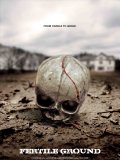
4. Fertile Ground


Emily and Nate Weaver leave the city for the rural comfort of Nate's ancestral home in the country. Once there, Emily is plagued by horrifying visions and haunted by the ghosts inhabiting their isolated new home.


5. Outcast


It tells the tale of Petronella (a Scottish/Romany girl) and Fergal (her mysterious Irish traveller boyfriend). As their doomed relationship plays out, a Beast stalks the estate, killing locals, working its way towards our protagonists. Meanwhile Cathal and Liam, two mysterious travellers from Ireland use ritual and magic on a blood hunt. Mary, Fergal's mother performs ritual and magic of her own. As Cathal comes face to face with Mary in a vicious finale we know one thing: the Beast must die.